


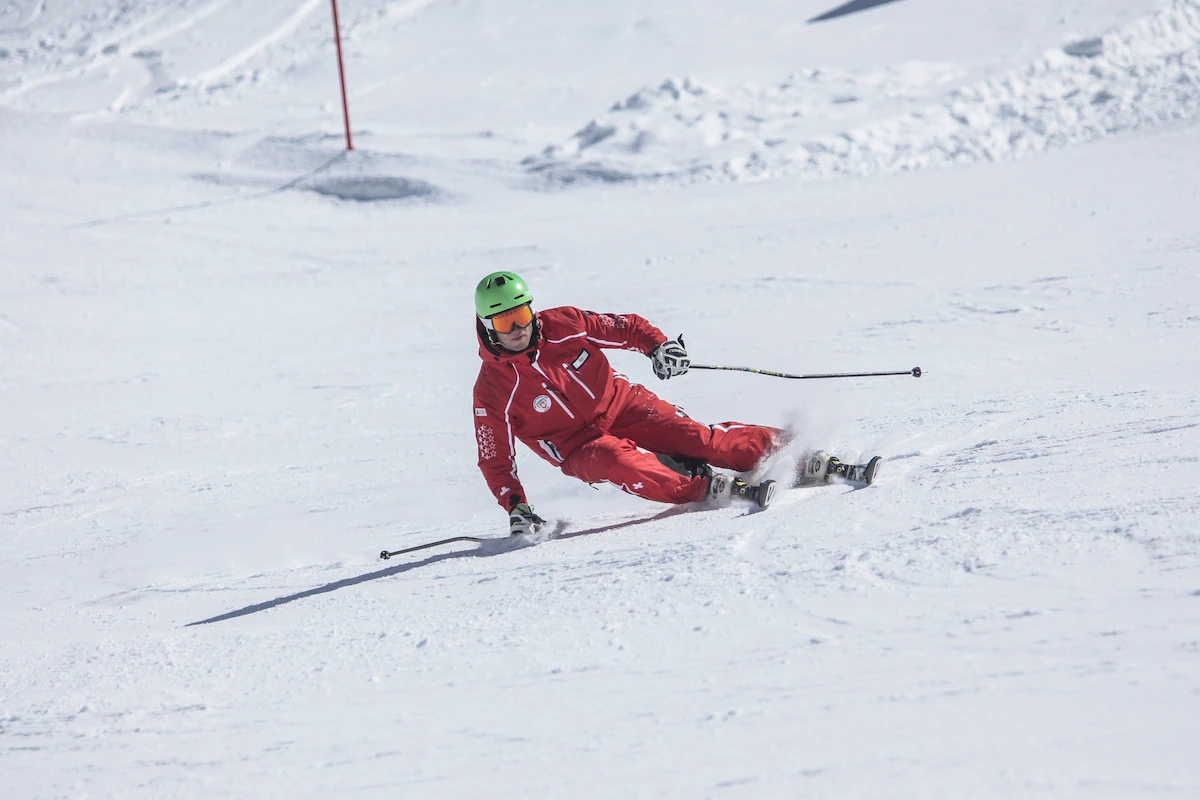
Hello there! Welcome to Bespoke Snowsports. As your dedicated instructor and guide to the magnificent, sprawling, and utterly breathtaking ski area of Grimentz-Zinal, I’m thrilled to have you here.
Here in the Val d’Anniviers, we’re not just a ski school; we’re a family of passionate skiers who live and breathe this mountain air. We have the incredible privilege of teaching wonderful people like you—from the tiniest tots taking their first slide to seasoned experts looking to conquer the freeride terrain, and families wanting to create those core memories together.
And in all my years of teaching, I’ve learned a powerful truth: the single most important piece of equipment for a fantastic day isn’t your skis. It’s not even your boots (though they are a very, very close second).
It’s what you’re wearing.
Grimentz-Zinal is a paradise. It’s an authentic, high-altitude wonderland crowned by the “Imperial Crown”—the ring of 4,000-meter peaks like the Weisshorn and the Zinalrothorn that watch over us. But paradise has its own set of rules, and the “Grimentz-Zinal climate” is a beautiful, dynamic, and changeable beast.
I’ve seen it all. I’ve seen people arrive with one giant, arctic-expedition jacket, only to be sweating and miserable by 11 AM. I’ve seen others in a simple hoodie, shivering and calling it a day just as the slopes quiet down for lunch.
Your comfort is our priority. A cold skier is a tense skier. A wet skier is a miserable skier. But a comfortable, dry, and warm skier? That’s a skier who’s relaxed, confident, and ready to learn. That’s the skier who falls in love with the sport.
So, how do you conquer the climate and ensure every moment on the snow is pure joy?
The secret isn’t one magic jacket. It’s a system. It’s an art form. It’s the art of layering.
In this guide, I’m going to share all the secrets I’ve learned—not from a catalogue, but from thousands of hours spent right here, on the slopes connecting Grimentz’s historic village to Zinal’s high-alpine basin.
We’ll build your perfect mountain outfit from the skin out. By the time you’re done reading, you’ll be able to pack like a pro, adapt to any weather, and focus on the one thing that matters: the sheer, exhilarating joy of skiing.
Let’s get you ready for the mountain.
Content
Understanding the Grimentz-Zinal climate
Before we talk about clothes, let’s talk about the why. Why is dressing for Grimentz-Zinal different from your home town, or even from other resorts?
Our ski area is a place of beautiful extremes.
1. It’s high (really high!):
The village of Grimentz sits at a respectable 1,572 meters (5,157 ft), and Zinal at 1,675 meters (5,495 ft). But our skiing? Our lessons and adventures take you way up. The top of the Corne de Sorebois cable car is 2,896 meters (9,501 ft), and the skiable terrain goes even higher.
- What this means for you: the air is thinner, the sun is stronger, and the weather changes fast. A 10°C (50°F) difference between the village and the summit isn’t just possible; it’s normal.
2. It’s a sun trap… and a wind tunnel:
The Val d’Anniviers is famous for its incredible sunshine record. You will experience glorious, bluebird days where the snow sparkles and the views are endless. But that high-alpine sun is intense. It reflects off the snow, meaning you’re getting hit with UV rays from above and below.
- What this means for you: Sun protection (sunscreen, goggles) is non-negotiable, even on cloudy days. But don’t let the sun fool you. The moment a cloud covers it, or the wind picks up (we call it “la bise” or the “Lombarde” wind blowing over from Italy), the temperature can plummet. I often see students shedding layers on a sunny piste, only to freeze on the next 10-minute chairlift ride.
3. The two-valley effect:
our ski area is brilliantly linked, but Grimentz and Zinal are two distinct valleys with their own characters. You might start your Bespoke Snowsports lesson in the morning sun on the wide, cruising pistes of the Bendolla side (Grimentz), and then, after a spectacular cable car ride, find yourself in the shady, north-facing (and often colder) high-alpine bowl of Zinal, where the snow stays powdery and crisp.
- What this means for you: You must be dressed for both. Your clothing system needs to handle a sunny, sheltered run and a cold, windy lift in the same hour.
This is why layering is our mountain mantra. It’s not about being warm; it’s about being adaptable. It’s a personal climate-control system that you can adjust all day.
Ready to build it? Let’s start from the inside out.
The sacred trinity: your 3-layer system
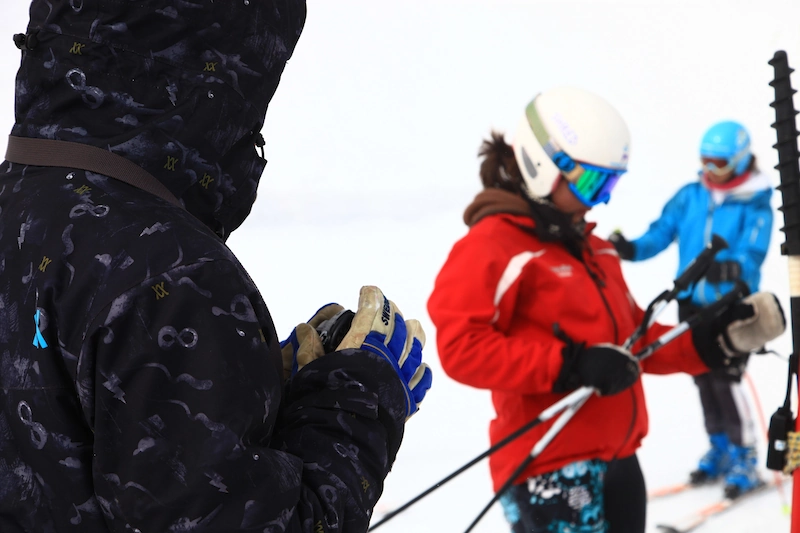
This is the core of all mountain wisdom. Forget “what jacket to buy” and first think “what system to build.” Every professional, from instructors to mountain guides, lives by this.
Layer 1: The base layer (your second skin)
This is, without question, the most important layer, and the one people get wrong most often.
- Its Job: To move moisture (sweat) away from your skin. Its job is not primarily to keep you warm; it’s to keep you dry.
- The golden rule: I’m going to say this in bold, and if you take one thing away from this article, let it be this: ABSOLUTELY, POSITIVELY NO COTTON.
I can’t tell you how many times I’ve had a student—kid or adult—who is shivering and miserable by 11 AM. “But I’m wearing a warm shirt!” they’ll say. And I’ll see a cotton t-shirt or thermal soaked with sweat under their jacket.
Cotton is a sponge. The moment you sweat (and you will sweat, even on a cold day), it absorbs that moisture and holds it against your skin. The second you stop moving—on the chairlift, waiting for your lesson—that wet layer steals all your body heat. It’s a recipe for a miserable day.
Your options (the good stuff):
1. Merino wool: This is the champion of base layers. It’s nature’s technical fabric.
- Pros: It wicks moisture beautifully, it’s incredibly soft, and it’s naturally anti-bacterial (thanks to lanolin), which means it won’t stink after one use. This is a huge bonus for a week-long trip! It also has the magic property of insulating even when damp.
- Cons: Can be more expensive and slightly less durable than synthetics.
- Weight: Look for a “lightweight” or “midweight” (around 150-250 g/m²).
2. Synthetics: These are fabrics like polyester or polypropylene.
- Pros: They are masters at wicking. They pull moisture off you and dry incredibly fast (they are “hydrophobic,” meaning they hate water). They are also very durable and typically cheaper than merino.
- Cons: They can get smelly fast. Many now have anti-odour treatments, but merino is still the king there.
The fit: a base layer must be snug. It needs to be in contact with your skin to do its job. not “compression-tight,” but “comfortably snug.” You’ll want both a long-sleeved top and full-length bottoms.
Instructor tip: i personally wear merino wool 90% of the time. The all-day comfort and odour resistance are worth every penny, especially when you’re working hard with a lesson and then stopping to explain a new technique.
Layer 2: the mid-layer (your personal thermostat)
This is your insulation layer. Its one and only job is to trap your body heat.
- Its job: To provide warmth. This is the layer you will add or remove to adapt to the day’s temperature.
- The golden rule: It must still be breathable. If it traps your sweat, the whole system fails. (Again… no cotton hoodies!)
Your options:
- Fleece (polyester): The classic, reliable, and fantastic-value option.
- Pros: Light, soft, breathable, and insulates well, even if it gets damp. It comes in various weights (e.g., Polartec 100, 200). A “grid fleece” is even more breathable.
- Cons: Can be bulkier than other options and is not windproof at all (but that’s your shell’s job!).
- Down puffer (lightweight): A thin jacket or gilet (vest) filled with goose or duck down.
- Pros: Offers the most warmth for the least weight and bulk. It’s incredibly compressible.
- Cons: Useless when wet. The moment down gets damp, it clumps and loses all insulating properties. Best for very cold, dry days.
- Synthetic puffer (e.g., primaloft, coreloft): This is the high-tech solution that mimics down.
- Pros: Almost as warm and light as down, but it retains its insulating properties when wet. This makes it a more versatile and, in my opinion, a safer bet for alpine skiing.
- Cons: Slightly heavier and bulkier than equivalent-warmth down.
How to Choose:
- For a cold December/January day: I’ll wear my merino base layer plus a mid-weight fleece. If it’s really cold (below -10°C), I might swap the fleece for a synthetic puffer.
- For a sunny March/April day: I’ll often wear just my base layer and my shell, or perhaps a very light micro-fleece in between.
Instructor tip: A zip-neck or full-zip fleece is far more practical than a crew-neck. When you’re working hard on a mogul field or helping a child up, being able to unzip your mid-layer to dump heat instantly is a game-changer. I often recommend a simple, 1/4-zip fleece as the most versatile piece you can own.
Layer 3: the outer layer (your shield)
This is your shell. This layer protects you from the outside world: the wind, the snow, and the occasional tumble.
- Its job: To be your armour against wind and water, while also letting the moisture (sweat vapour) from your base and mid-layers escape.
- The golden rule: It must be a balance of waterproof and breathable.
This is where you see those confusing numbers, like “10k/10k.”
- First number (waterproofing): Measured in millimeters (e.g., 10,000 mm or 10k). This is how much water pressure the fabric can withstand before it leaks. For resort skiing in Grimentz-Zinal, anything from 5k to 20k is fine. 10k is a great all-around standard.
- Second number (breathability): Measured in grams (e.g., 10,000 g or 10k). This is how much water vapour can pass out of the fabric in 24 hours. The higher the number, the more breathable. This is crucial! A 20k waterproof jacket with 2k breathability is just a high-tech trash bag; you’ll be soaked from the inside. Look for at least 5k, and ideally 10k or higher.
Your options (jacket & trousers):
- Insulated jacket/trousers: This combines the mid-layer and outer layer into one.
- Pros: Simpler (one piece to buy), often warmer and cozier.
- Cons: Far less versatile. You have no adaptability. If the sun comes out, you’re stuck. You can’t take your insulation off. I see so many people unzipping these to their waists, which then just lets wind and snow in.
- Shell jacket/trousers (uninsulated): This is just the waterproof/breathable shield.
- Pros: Maximum versatility. This is what most pros and instructors wear. It allows you to perfectly control your temperature using your mid-layers. You use the same shell on a -15°C day (with a heavy mid-layer) as you do on a +5°C spring day (with just a base layer).
- Cons: You must have good mid-layers. It can feel thinner and less “cozy” at first.
Instructor’s verdict: Please, if you can, go for the Shell option. It gives you control. It empowers you to adapt to the Grimentz-Zinal climate, not just endure it.
Essential features to look for:
- Pit zips (vents): zippers under the armpits (on jackets) or on the thighs (on trousers). These are your radiators. Working hard? Open them. On the lift? Close them. Non-negotiable.
- Snow skirt: an elasticated gaiter inside your jacket that stops snow from flying up your back when you fall.
- Helmet-compatible hood: a hood that is big enough to fit over your helmet. Essential for windy chairlifts or a sudden storm.
- Pockets: You need a dedicated, secure lift-pass pocket (usually on the left forearm).
From head to toe: the underrated essentials
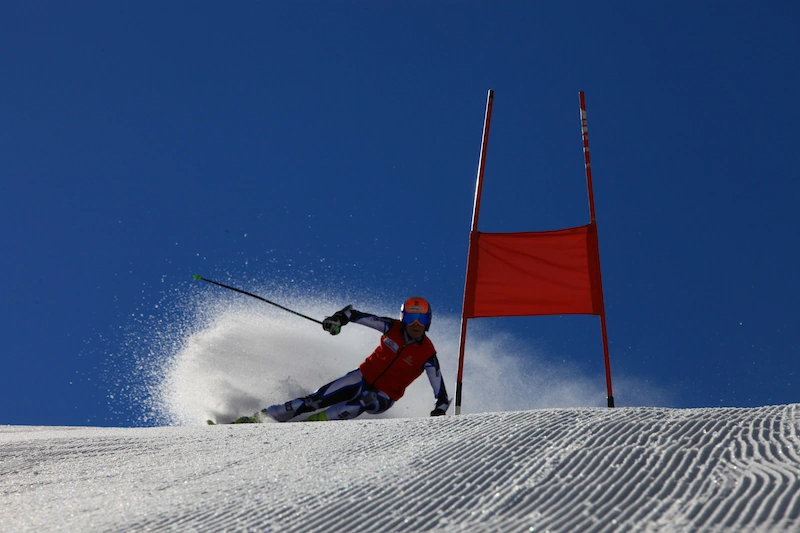
Your 3-layer system is the engine, but these accessories are the wheels, steering, and brakes. Get them wrong, and the whole system grinds to a halt.
1. Your feet (the foundation of a good day)
I’m starting here because this is where misery begins. Cold feet = day over.
- Socks: You need ONE (1) pair of good, ski-specific socks.
- NOT TWO PAIRS. I repeat: DO NOT WEAR TWO PAIRS OF SOCKS. This is the #1 mistake I see. It doesn’t make you warmer. It wrinkles, cuts off your circulation, and makes you colder.
- Material: Again, a Merino wool blend or a synthetic blend. NO COTTON.
- Thickness: Thinner is often better. Your warmth comes from your boots, which trap air. A thick, chunky sock just compresses, restricting blood flow. A good, thin-to-midweight ski sock is all you need.
- Ski boots: This is the most important piece of equipment you will own. A boot that fits poorly will ruin your day, your week, and your desire to ski.
- Instructor Tip: Please, please get your boots fitted by a professional boot fitter. Don’t just buy them online. At Bespoke Snowsports, we can recommend fantastic local shops in Grimentz and Zinal where you can get this done. A well-fitted boot is the key to control, comfort, and warmth.
2. Your head (protect your brain, keep it warm)
- Helmet: This is non-negotiable. At Bespoke Snowsports, helmets are mandatory for all children in our lessons, and we strongly, strongly recommend them for adults.
- Why? It’s not just about you; it’s about other people. The slopes are busy. A helmet keeps you safe, and guess what? They are incredibly warm and comfortable, with adjustable vents that often make a separate beanie obsolete.
- Balaclava or neck gaiter (“buff”): This is my secret weapon. I never ski without a neck gaiter.
- Why? It’s the most versatile bit of clothing you can own.
- Cold lift? Pull it up over your chin and nose.
- Windy? Pull it up over your ears, under your helmet.
- Sunny? Keep it around your neck to protect from sun-scald.
- White-out? It becomes a full balaclava, sealing the gap between your goggles and helmet.
- Why? It’s the most versatile bit of clothing you can own.
3. Your eyes (see the mountain, protect from the sun)
You need to deal with two polar opposites in Grimentz-Zinal: blinding, high-alpine sun and “flat light,” where a white cloud blends into the white snow, making it impossible to see the bumps.
- Goggles: This is your primary ski-day tool.
- Fit: They must fit your face and your helmet. There should be no gap between the top of your goggles and the brim of your helmet (we call this the “gaper gap” or “forehead freeze”).
- Lenses: This is the key. Most modern goggles come with interchangeable lenses. You need at least two:
- A sunny day lens (VLT 10-25%): This will be a dark, mirrored, or polarized lens (grey, blue, green). It cuts glare and saves you from squinting.
- A bad weather / flat light lens (VLT 50-80%): This will be a light, high-contrast lens (yellow, orange, pink, or clear). It gathers light and helps you see definition in the snow.
- Instructor tip: Never wipe the inside of your goggle lens with your glove. It will destroy the anti-fog coating. If you get snow inside, shake it out and let it air-dry.
- Sunglasses: The USP you asked about! Yes, you need these too.
- Why? You don’t ski in them (unless it’s a very warm spring day and you’re skiing slowly). You use them for everything else. Walking to the lift, sitting on a restaurant terrace for lunch (like the fantastic one at Bendolla), or enjoying a drink in the village after skiing.
- What kind? Get good ones. The sun here is serious. Look for 100% UV protection and a “Category 3” or “Category 4” rating. Wraparound “glacier” style glasses are best for ultimate protection.
4. Your hands (the great glove vs. mitten debate)
- Mittens:
- Pros: Warmer. By keeping your fingers together, they share heat.
- Cons: Less dexterity. Hard to do zippers, hold poles (for beginners), or get your phone out.
- Gloves:
- Pros: Better dexterity. Easier to manage your gear and help kids.
- Cons: Colder. Your fingers are isolated.
- Instructor’s verdict: For adults, I recommend a good pair of waterproof, insulated gloves. For all children, I recommend mittens. They are just so much warmer, and keeping kids’ hands warm is half the battle. On very cold days, I wear mittens myself, or a “lobster” style glove.
- Liners: A thin pair of merino or silk glove liners can add a huge boost of warmth to your main gloves/mitts and are great for those moments when you need to take your main glove off to use your phone.
Special considerations (kids, mistakes, and what’s in my pack)
Packing for the kids: a parent’s guide
As instructors who specialize in family and children’s lessons, this is close to our hearts. A warm kid is a happy kid. A happy kid is a learning kid.
- Layers are more important for them: Kids don’t regulate temperature as well as adults. They go from 100mph (sweating) to 0mph (freezing) in seconds. Use the exact same 3-layer system for them. (And yes, no cotton!)
- Mittens, not gloves: I said it before, but it’s worth repeating. They are easier to put on and infinitely warmer.
- One-piece suits: For very young children (under 6), a one-piece insulated suit is often a brilliant, simple solution. It’s warm, and there’s no gap for snow to get in when they inevitably tumble.
- The “pocket fill”: Check their pockets before they start their lesson. I always find:
- A spare neck gaiter (the first one will get wet/soggy).
- Tissues.
- A little high-energy snack (not sugary, just energy).
- Sunscreen.
- Label everything: You would not believe the mountain of lost-and-found. Label their helmet, goggles, gloves, everything.
Here at Bespoke Snowsports, our first check is always comfort. We’ll adjust their goggles, pull their “buff” up, and make sure they’re zipped and warm before we even click into our skis. Your child’s comfort and safety are our foundation for a fun lesson.
The 5 classic clothing mistakes I see in Grimentz-Zinal
- The cotton killer (You knew this was coming.) A cotton t-shirt, cotton sweatshirt, or cotton “long-johns.” It’s the fastest way to get cold.
- The denim disaster: Yes, people ski in jeans. They get wet in 30 seconds, then they freeze solid. It’s dangerous and looks agonizing.
- The “gaper gap”: The exposed patch of skin between goggles and helmet. Instant headache and frostnip.
- Double Socks: The classic “warmer” myth that just makes you colder.
- Forgetting sunscreen: “It’s cloudy” or “It’s cold.” I’ve seen some of the worst sunburns of my life on cloudy, cold days. The UV at this altitude is no joke. Apply in the morning and again at lunch.
What’s in my instructor pack?
My students often ask what I carry in my little backpack. It’s all about adaptability.
- An extra layer (usually a light synthetic puffer).
- A spare pair of glove liners.
- A spare lens for my goggles.
- My sunglasses.
- A high-energy bar and water.
- Sunscreen.
- A small first-aid kit.
I’m prepared for the weather to turn, for a student to get cold, or for the sun to come blazing out. I’m adaptable—and that’s what I want you to be, too.
Your adventure awaits
Dressing for the Grimentz-Zinal climate isn’t complicated; it’s just a system. It’s a way of thinking that puts you in control.
It’s about giving yourself the freedom to not think about your clothes.
It’s the freedom to stand at the top of the Corne de Sorebois, feel the wind, but not the chill, as you gaze out at the Imperial Crown. It’s the freedom to cruise the long, magical piste from Grimentz all the way down to the bottom of Zinal without feeling damp. It’s the freedom to focus on your technique, on the laughter of your family, and on the incredible feeling of sliding on snow.
Here at Bespoke Snowsports, our entire philosophy is built around you. We tailor every lesson to your goals, your style, and your energy. Preparing you for the mountain before you even arrive is part of that service.
Now you know how to dress like a pro. You’re ready.
All that’s left is to come and experience the magic for yourself. If you’re ready to explore this incredible domain, from your very first turns to finding the best-hidden powder, we’re here for you.
Let’s share an adventure. Contact Bespoke Snowsports to book your private lesson or family adventure.
We can’t wait to see you on the snow!