


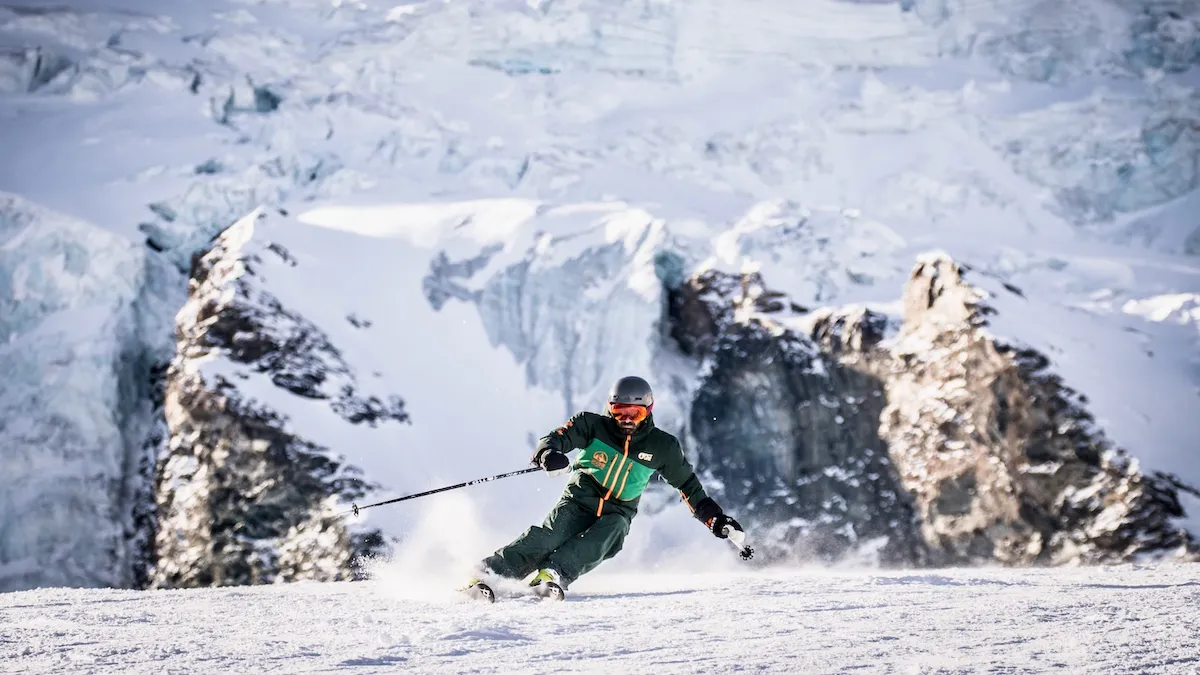
Finding the right ski instruction in the Swiss Alps often feels like a choice between two very different paths. Grimentz-Zinal, located in the heart of the Val d’Anniviers, offers some of the most spectacular terrain in Switzerland.
Whether you are a parent looking for the best for your child, a competitive athlete aiming for the podium, or an adult wanting to refine your style, the type of coaching you choose changes everything about your time on the snow.
Most people are familiar with the standard ski school model, but there is a growing interest in more tailored options. Understanding the differences between Bespoke Snowsports vs. traditional schools in Grimentz-Zinal helps you make a choice that aligns with your specific goals.
Traditional schools have been the backbone of mountain tourism for decades. They provide a vital service for beginners and large groups. However, as your skills progress, the limitations of a standardized curriculum often become apparent.
This is where a more personalized methodology comes into play. Instead of following a rigid manual, the focus shifts to your individual biomechanics, your psychological approach to speed, and your long-term development as an athlete.
In this article, we will look at how these two approaches differ and what that means for your progress on the mountain.
Content
The skiing landscape of the Val d’Anniviers
Grimentz and Zinal are now linked by one of the longest cable cars in Switzerland, creating a vast playground for skiers. The area is known for its high altitude, reliable snow conditions, and incredibly varied terrain.
You have everything from perfectly groomed red runs to some of the most challenging off-piste faces in the Alps. Because the terrain is so diverse, the demands on your technique are high. A one-size-fits-all lesson rarely prepares you for the nuances of this specific environment.
As we saw earlier, the local geography influences how coaching is delivered. Traditional schools often stick to designated “beginner” or “intermediate” zones to manage large numbers of students safely.
While this works for the basics, it doesn’t allow you to explore the mountain in a way that builds real-world skills. On the other hand, a more tailored approach uses the entire mountain as a classroom.
If the goal is to improve your edge pressure, your coach might take you to a specific pitch in Zinal that offers the perfect gradient for that drill. This connection between the terrain and the technical goal is a hallmark of high-level coaching.
How traditional ski schools operate in Switzerland
Traditional schools usually follow a structured system. Students are grouped by “levels” often denoted by colors like blue, red, or black. This system is efficient for moving hundreds of people through a program, but it can sometimes feel like a factory.
The instructors are often seasonal workers who, while talented and enthusiastic, must follow a specific teaching manual. This means that if you are in a “Red League” class, you will do the same drills as every other person in that league, regardless of whether those drills address your specific weaknesses.
Another factor to consider is group size. In a traditional setting, you might be one of eight or ten skiers. The instructor has to divide their attention among everyone.
This leads to a lot of “follow the leader” skiing, where you spend more time watching the back of someone’s jacket than receiving actual feedback. For those who just want to spend a social day on the mountain, this is fine. But if you want to fix a specific technical flaw—like a rotating hip or a late weight transfer—you need more eyes on your skiing.
The personalized methodology of Bespoke Snowsports
When we talk about Bespoke Snowsports, the conversation shifts from “lessons” to “coaching.” This brand focuses on a highly individualized approach. The personalized methodology starts with an assessment of your current physical capabilities, your equipment, and your history on the snow.
No two skiers move exactly the same way. One person might have incredible flexibility but lack core stability, while another might be physically strong but struggle with the “feel” of the snow under their feet.
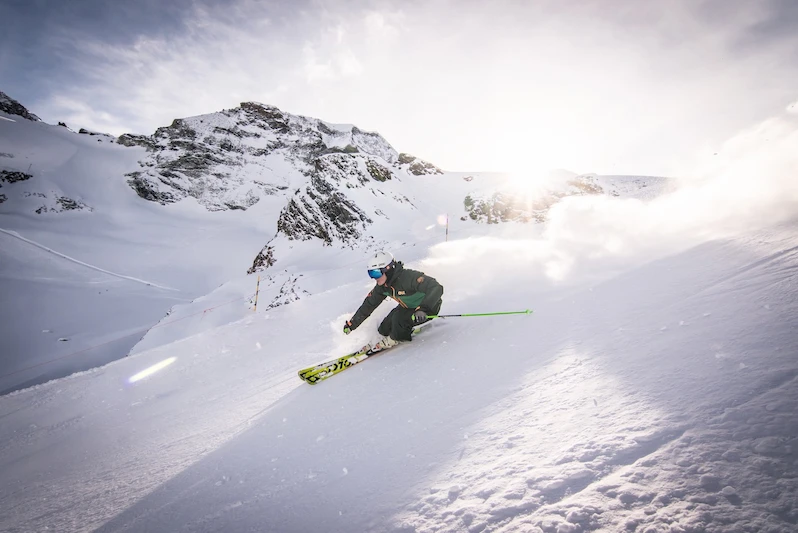
By focusing on these individual traits, coaching becomes much more efficient. Instead of spending hours on generic drills, you work on the specific movements that will unlock the next level of your performance.
This often involves modern tools like high-definition video analysis and even radio communication. Being able to hear a correction in your ear while you are mid-turn is a game-changer. It allows you to make adjustments in real-time, which accelerates the learning process significantly.
Focus on creating lifelong passion through coaching
One of the most important aspects of this tailored approach is the focus on creating lifelong passion. Traditional schools often focus on the “now”—getting through the week, passing the test, and getting the medal.
While that provides a short-term sense of achievement, it doesn’t always build a deep connection with the sport. Elite coaching aims to help you understand the “why” behind the movements.
When you understand the physics of a carved turn or the tactics of a race line, skiing becomes an intellectual pursuit as much as a physical one.
This deeper understanding is what keeps people coming back to the mountains year after year. It’s about more than just surviving a steep run; it’s about the joy of executing a perfect turn with total control.
As you might have noticed in this article, the goal isn’t just to make you a better skier for your holiday but to turn you into a student of the sport who can continue to improve long after the session ends.
Comparing training styles and results
To help you see the differences more clearly, let’s look at how these two models compare across several key areas. This table highlights what you can expect from each experience in Grimentz-Zinal.
| Feature | Traditional ski schools | Bespoke Snowsports coaching |
|---|---|---|
| Group Size | Usually 6 to 10 people | Private or very small elite groups |
| Curriculum | Standardized national manual | Fully customized to the individual |
| Instructor Consistency | May change throughout the week | Dedicated coach for the duration |
| Tools Used | Visual demonstration | Video analysis, timing, radio comms |
| Focus | General mountain safety and levels | Technical precision and race performance |
| Terrain Use | Standardized “safe” slopes | Varied terrain suited to technical goals |
As the table shows, the investment in a bespoke service is about more than just exclusivity. It’s about the quality of the feedback and the tools used to provide it. For an athlete who is serious about their progress, the difference in results can be measured in seconds on a racecourse or in the level of confidence on difficult off-piste terrain.
Technical differences in race training and gate technique
For those interested in competitive skiing, the gap between traditional instruction and elite coaching becomes even wider. Most traditional schools offer a “race club” or “competition” level, but this is often just a faster version of a regular lesson.
Elite race training requires a much more technical approach. We look at things like the timing of the “pressure phase” in a turn and how to maintain a high line in the gates.
Gate technique is a specific skill set. It’s not just about skiing around the poles; it’s about how you interact with them. This involves understanding the line—the path your skis take through the course.
A coach with experience in elite training will teach you how to “read” a course, identifying where you can take risks and where you need to be conservative to carry speed into a flat section. This level of track strategy is rarely covered in a standard school setting.
We’ll look at this in more detail later, but it’s worth noting that your equipment plays a huge role here too. A racing coach won’t just tell you how to ski; they will check your boot alignment, your edge bevel, and your wax choice.
These “marginal gains” are what separate the winners from the rest of the field. In a traditional school, the instructor might not have the technical background to advise you on the specific tuning of a Slalom ski versus a Giant Slalom ski.
Why equipment choice affects your progress
It is a common mistake to think that the skier does all the work and the equipment is secondary. In reality, your gear is the interface between your body and the snow. If your boots are too soft, your movements won’t be transmitted to the skis accurately.
If your skis are too short or have the wrong radius for your height and weight, you will struggle to find the right balance. High-level coaching always includes an equipment audit.
In Grimentz-Zinal, the snow can vary from hard-packed ice in the morning to soft slush in the afternoon. Having the appropriate setup for these conditions is vital. A professional coach helps you understand how to adjust your technique based on what’s under your feet.
They might suggest a different side-edge angle for better grip on the Zinal glaciers or a specific boot setup that allows for better ankle flexion. This technical advice is part of the Access to Swiss Elite Training for Private Athletes that makes such a difference in performance.
Training for all ages: from juniors to masters
One of the best things about skiing is that you never stop learning. However, the way a seven-year-old learns is very different from the way a forty-five-year-old learns.
Traditional schools often excel with very young children because they focus on play and social interaction. But as children become teenagers and start looking for more challenge, they often outgrow the traditional system. They need more intensity and more technical feedback to stay engaged.
For adults, and specifically Masters racers, the challenge is often about overcoming old habits or physical limitations. A bespoke coach understands the biomechanics of an adult body.
They won’t ask you to move in a way that risks injury. Instead, they find the most efficient way for you to ski based on your current fitness and flexibility. This respectful and expert approach ensures that you can continue to ski at a high level for many years, maintaining that lifelong passion we mentioned earlier.
As you can see, the age of the athlete doesn’t change the need for quality coaching; it only changes the delivery. Whether it’s a junior athlete aiming for the national team or a professional looking to shave a few tenths off their time, the principles of physics and biomechanics remain the same. The key is having a coach who can translate those principles into language and drills that make sense for you.
The importance of consistency in coaching
One of the biggest hurdles in a traditional ski school is the lack of consistency. You might have one instructor on Monday and a different one on Wednesday. Each person has their own way of explaining things, which can lead to confusion. You spend the first hour of every lesson “getting to know” the new instructor, which is a waste of your valuable time on the snow.
Working with a dedicated coach through a bespoke program eliminates this problem. Your coach knows exactly what you worked on yesterday, what you struggled with last year, and what your goals are for the end of the season.
This continuity allows for a much more sophisticated training plan. You can build on each success, layer by layer, until the new movements become second nature. This is how real progress is made—not through disconnected “tips,” but through a coherent, long-term strategy.
What to expect from a day of elite training
A typical day with a high-level coach in Grimentz-Zinal looks very different from a standard ski lesson. It usually starts with a warm-up that is specific to the day’s goals. If you are focusing on Slalom, the warm-up will involve drills that activate the quick-twitch muscles in your legs and core. There is a purpose to every run.
During the session, you will likely spend time in a “training lane.” This is a section of the slope closed off specifically for athletes to run gates or specific technical exercises. This environment is much safer and more productive than trying to train on a crowded public run.
Between runs, you will look at video footage. Seeing yourself on screen is often the “lightbulb moment” where you finally understand what the coach has been telling you. You might see that your outside ski is washing out because your hips are too far back, and you can immediately go back up and try to fix it.
The day often ends with a debrief. You’ll talk about what went well, what still needs work, and what the plan is for the next session. This professional and structured approach is what characterizes Swiss Elite Training. It’s about being deliberate and intentional with your time on the mountain.
Questions you should ask before booking
Before you decide which path to take, it’s helpful to ask a few questions to ensure the program fits your needs. Not every “private lesson” is the same, and knowing what to look for will save you time and money.
- What is the coach’s background? Do they have experience with competitive racing or high-level technical coaching, or are they a generalist?
- How is video analysis integrated? Is it just a quick look on a phone, or is it a detailed session with professional software?
- Is there a long-term development plan? Will they help you set goals for the season, or is it just about the one day?
- What tools are used for communication? Do they use radios to provide feedback while you are actually skiing?
- How do they handle equipment advice? Will they help you with boot fitting or ski selection?
If you are looking for significant improvement, you want a coach who can answer “yes” to these questions and provide specific examples of how they help their athletes. This is the difference between someone who just “skis with you” and someone who actually “coaches you.”
The role of psychology in high-performance skiing
Skiing at a high level is as much a mental challenge as a physical one. Speed can be intimidating, and the pressure of a racecourse can cause even the best athletes to tighten up. Traditional schools rarely touch on the psychological side of the sport. They focus on the “how” but not the “head.”
An expert coach understands how to build your confidence. This isn’t just about “positive thinking”; it’s about giving you the technical tools so that you know you are in control.
When you have a solid technical foundation, you can trust your skis. That trust allows you to relax, which in turn makes you faster and more fluid. This holistic approach—combining technical, physical, and mental training—is what sets elite coaching apart. It helps you handle the “ice” or the “steeps” not with fear, but with a clear plan and the skills to execute it.
Making the most of your time in Grimentz-Zinal
Your time in the mountains is precious. Whether you have a few days or a few weeks, you want to make sure every hour on the snow counts. Grimentz-Zinal offers a unique environment that can either be a place where you “just ski” or a place where you transform your technique.
By choosing a program that offers personalized methodology and access to Swiss Elite Training, you are giving yourself the best possible chance to succeed.
As we have seen throughout this article, the choice between Bespoke Snowsports vs. traditional schools in Grimentz-Zinal comes down to your personal goals. If you want a social experience and a general overview of the mountain, a traditional school is a great choice.
But if you are driven by progress, if you want to understand the mechanics of the sport, and if you hope to reach your full potential as an athlete, the tailored approach is the way to go.
The beauty of the Val d’Anniviers is that it rewards good technique. When you can ski these mountains with precision and power, the experience is unlike anything else. It’s about more than just getting down the hill; it’s about the feeling of the wind on your face, the perfect grip of the edge on the snow, and the satisfaction of knowing you are skiing at your very best.
Common questions about ski coaching in Switzerland
Is Bespoke Coaching only for professional racers?
Not at all. While the techniques used are the same as those for professionals, the coaching is adapted for anyone who is serious about improving. This includes recreational skiers who want to feel more confident on difficult terrain or masters athletes who aim to refine their race skills.
How many hours of coaching do I need to see a difference?
You will often see a difference in just one session because the feedback is so specific. However, for long-term changes in your muscle memory, a consistent program over several days or weeks is more effective. It takes time for new movements to become automatic.
Can children benefit from personalized training?
Yes, especially if they are already competent skiers. For kids who are interested in racing or who find traditional lessons too slow, a more technical and challenging environment can be very motivating. It helps them build a strong foundation early on.
Do I need special equipment for elite training?
You don’t need “pro” gear to start, but your coach will likely give you advice on how to improve your current setup. As you progress, you might find that more specialized equipment helps you reach the next level of performance.
Why is Grimentz-Zinal a good place for this type of training?
The combination of high altitude, excellent snow quality, and varied terrain makes it an ideal “training lab.” The slopes in Zinal, in particular, are famous for their consistent pitch, which is perfect for technical drills and gate training.
Are you ready to take your competitive skiing to the next level? Join our competitive skiing program, perfect your technique, master gate technique and track strategy, or visit the competitive skiing camp for professional training and advice on the equipment that will help you win.