


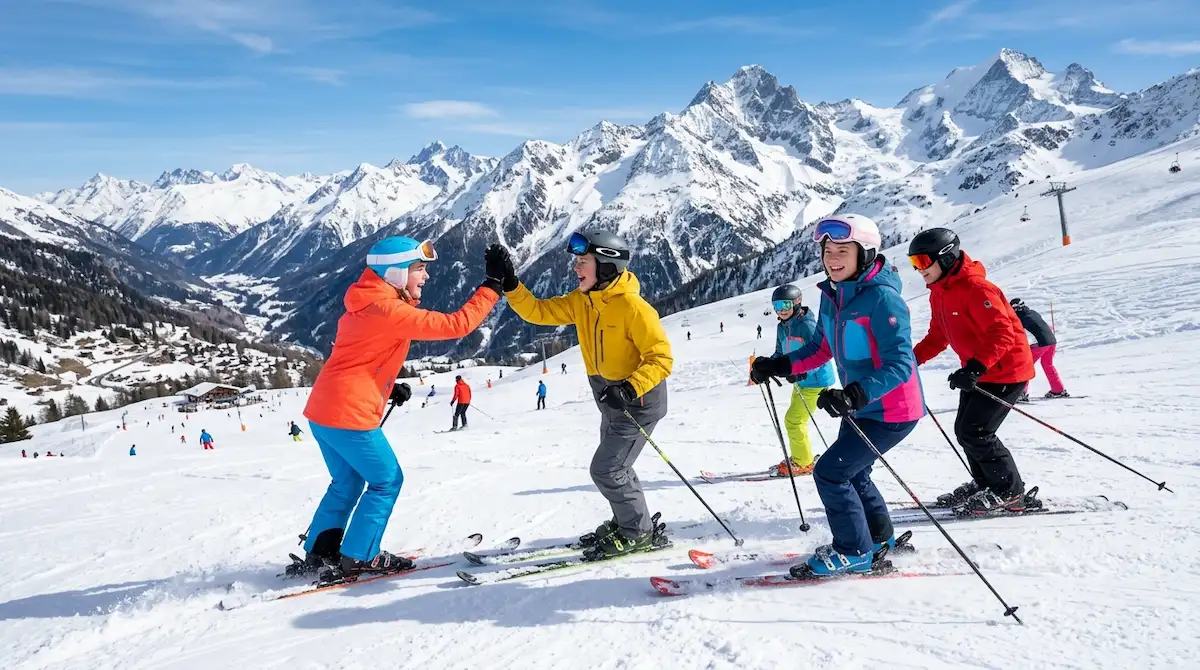
The teenage years represent a pivotal moment in a skier’s development. It’s a time of rapid physical growth, burgeoning independence, and a desire to push boundaries. In the world of skiing, this translates into an incredible opportunity for progression, but it also presents unique challenges.
Standard ski lessons, often designed for younger children or adults, can miss the mark, failing to engage teens on their own terms or address their specific developmental needs. What they require is not just instruction but mentorship—a program that respects their growing autonomy while providing the elite technical framework needed to safely explore the demanding terrain of a resort like Grimentz-Zinal.
This is where a specialized approach to ski coaching becomes essential. It’s about moving beyond the mechanics of turning and stopping and entering the realm of performance consultancy. For adolescents, a successful ski experience is built on a foundation of trust, challenge, and tangible achievement. They need to feel they are co-pilots in their learning journey, not just passengers.
Our philosophy centers on creating a dynamic partnership between coach and athlete. We leverage the unparalleled off-piste and varied pistes of the Val d’Anniviers to build not just better skiers, but more confident, resilient, and mountain-aware individuals. The goal is to transform their time on the snow from a simple winter activity into a lasting passion grounded in real skill.
This guide explores the nuances of coaching this specific age group within our unique alpine environment. We will delve into the technical, psychological, and social elements that make our programs effective.
From mastering the fundamentals on Zinal’s pristine groomers to navigating the legendary freeride routes connecting to Grimentz, every session is a calculated step toward unlocking their full potential. It’s a process that respects their individuality and fuels their ambition, ensuring that every run down the mountain is a step up in their personal development.
Content
Building the foundational skills for lifelong skiing
Before a skier can confidently tackle variable conditions or steep descents, their fundamental technique must be impeccable. For teenagers, this is a critical phase. They possess the physical strength and coordination to make significant technical leaps, but they may also have ingrained habits from earlier years that need refinement.
A high-performance approach focuses on deconstructing and rebuilding these core skills with precision, creating a solid platform for all future learning. It’s not about skiing harder; it’s about skiing smarter, more efficiently, and with greater control.
Our methodology begins with a detailed on-snow assessment. We observe the skier’s natural stance, turn initiation, and energy management. This isn’t a test, but a collaborative diagnostic process. We use video analysis right on the slopes, providing immediate, visual feedback that resonates powerfully with this digitally native generation.
Seeing their own movements allows them to understand abstract concepts like hip angulation, edge pressure, and fore-aft balance in a concrete way. This evidence-based coaching builds trust and accelerates the learning curve, making the process feel more like a sport science session than a traditional lesson.
The central role of posture and balance
Everything in skiing begins and ends with posture and balance. An athletic, centered stance is the non-negotiable starting point for efficient movement. Many developing skiers, including teens, adopt a defensive, “back-seat” position, which compromises control and leads to fatigue.
We work meticulously to correct this, using a series of targeted drills that encourage a forward, proactive stance where the center of mass is aligned over the balls of the feet. This isn’t just about standing correctly; it’s about maintaining that dynamic balance through every phase of the turn, across changing snow textures and terrain pitches.
We introduce exercises that challenge their proprioception—the body’s awareness of its position in space. Skiing on one ski, making turns without poles, and navigating gentle bumps with hands placed on hips are all simple yet profound ways to enhance this internal sense of balance.
The goal is to make a centered stance an unconscious, default state. When a skier no longer has to think about their balance, they free up mental bandwidth to focus on higher-level skills like line choice, tactics, and reading the terrain ahead. This foundational work is the key that unlocks the entire mountain.
Mastering the carve: The science of the perfect turn
A carved turn is the hallmark of a technically proficient skier. It is the most efficient way to travel down the mountain, conserving energy and providing maximum control. For teenagers eager to ski fast and look good doing it, mastering the carve is a major milestone. We break down the turn into its distinct components: initiation, shaping, and completion. The focus is on using the ski’s design—its sidecut—to do the work. This involves learning to roll the skis onto their edges with precise movements of the ankles, knees, and hips, rather than pushing or steering with the feet.
To achieve this, we utilize the wide, perfectly groomed pistes of the Zinal sector, like the Combe Durand, which offer a perfect canvas for carving drills. We start with long, sweeping super-G turns to help them feel the ski engage and arc. Video feedback is crucial here, allowing us to pinpoint the exact moment of edge engagement and highlight the relationship between body inclination and edge angle.
We then progress to shorter-radius turns, teaching them how to blend edge pressure and rotational movements to create a dynamic, rhythmic flow down the fall line. Understanding the physics of a carved turn transforms their skiing from a series of disconnected maneuvers into a fluid, powerful dance with gravity.
Developing pole plant and upper body discipline
The role of the upper body is often underestimated by intermediate skiers. A quiet, stable upper body, properly separated from the lower body’s turning movements, is essential for balance and rhythm. The pole plant is not just for pushing; it is a critical timing mechanism that dictates the start of a new turn.
For teens, who are often full of excess energy, learning this discipline can be a game-changer. It channels their power effectively and prevents the wild, uncontrolled arm movements that can throw a skier off balance.
We introduce specific drills designed to foster upper-body and lower-body separation. Skiing with poles held horizontally across the hips or chest helps visualize and maintain a stable core while the legs and skis turn beneath. We practice pole plants methodically, first at a standstill, then in slow, deliberate turns, focusing on the timing—a light, precise tap in the snow just before the new turn begins.
This seemingly small detail has a massive impact, particularly in short turns, moguls, and steep terrain. It provides a third point of contact, however brief, that stabilizes the body and creates a consistent rhythm, turning good skiing into great skiing.
Expanding the comfort zone: All-mountain exploration
Once the technical foundation is secure, the real adventure begins. Grimentz-Zinal is not a resort for staying on the groomed trails; its true character is revealed in its vast and varied off-piste terrain, moguls, and natural features. For a teenager, successfully navigating these challenges is the ultimate confidence booster. Our role shifts from pure technical instruction to tactical coaching and mountain mentorship.
We guide them in applying their newfound skills to unpredictable environments, teaching them how to read the mountain, make smart decisions, and move with fluidity and confidence.
This phase of learning is about building adaptability. The mountain is a dynamic environment where snow conditions can change in a matter of meters. A skier who can only perform on a perfect groomer is not a complete skier. We introduce new challenges incrementally, ensuring that each step outside the comfort zone is a positive, learning-focused experience.
The goal is not to scare them, but to empower them by showing them they have the skills and the mindset to handle whatever the mountain throws their way. This is where skiing for teenagers in Zinal becomes a transformative experience.
Introduction to moguls and uneven terrain
Moguls can be intimidating for any skier, but they are also one of the best training grounds for developing advanced skills. They demand precise edge control, quick feet, and a powerful, absorptive lower body. We don’t just throw our students into a steep bump field. We start on the gentler, more rhythmic moguls found on the sides of runs like the Aigle.
The initial focus is on the absorption-extension principle: flexing the ankles, knees, and hips to absorb the bump, then extending into the trough to maintain snow contact and initiate the next turn.
The pole plant becomes absolutely critical here, providing the timing and stability needed to link turns smoothly. We teach two primary lines through the moguls: the “rut line” for control and the “zipper line” for speed and rhythm. We break down the movements, often having them ski just a few bumps at a time before linking more together.
This methodical approach demystifies the moguls, turning a field of intimidating obstacles into a fun, rhythmic playground. The agility and balance learned in the bumps translate directly to better performance all over the mountain.
First tracks in off-piste and powder
For many, skiing fresh powder is the ultimate goal. The feeling of floating through untouched snow is unparalleled. However, it requires a different technique than skiing on hardpack. We introduce our young skiers to off-piste skiing in safe, controlled environments, often starting in the accessible powder fields near the Corne de Sorebois.
The key technical adjustments we focus on are maintaining a more centered and balanced stance, using a narrower ski platform, and employing a more fluid, up-and-down bouncing motion to keep the tips up and maintain momentum.
Safety is the absolute priority. Before we even enter off-piste terrain, we conduct a thorough briefing on mountain safety. This includes an introduction to avalanche transceivers, probes, and shovels. We teach them how to use the equipment and, more importantly, how to read the terrain and make smart decisions to avoid hazards in the first place. This isn’t just a ski lesson; it’s an education in mountain craft.
Giving them the skills to ski powder is one thing; giving them the knowledge to do it safely for the rest of their lives is our true objective. This comprehensive approach builds not only skill but also deep respect for the alpine environment.
Tactical approaches to steep skiing
The steeps of Grimentz-Zinal, such as the descent from the Chamois sector, present the ultimate test of technique and nerve. Skiing steep terrain is as much a mental game as a physical one. Control is paramount. We teach the importance of the “corridor” concept—visualizing a safe path down the slope and executing precise, controlled turns within it.
The key technique for steep descents is the short, dynamic turn, often called a “pedal turn” or “hop turn.” This maneuver allows the skier to pivot the skis quickly across the fall line with minimal acceleration.
We practice these turns on progressively steeper pitches, always ensuring the student feels in control. The focus is on a strong, committed pole plant downhill, which acts as an anchor point, and a powerful muscular effort to bring the skis around. We also work on side-slipping and edge control, essential skills for navigating very steep or icy sections.
Overcoming the psychological barrier of a steep slope is a huge achievement for a teenager. It builds immense self-confidence and proves to them that with the right technique and a calm mindset, they can handle even the most challenging situations.
The psychology of coaching: Building confidence and resilience
Coaching teenagers is fundamentally different from teaching younger children or adults. It requires a profound understanding of their psychological and emotional landscape. They are in a state of transition, seeking both independence and guidance. An effective coach acts as a mentor, creating an environment of mutual respect where the athlete feels heard, valued, and challenged positively. The goal is to foster intrinsic motivation—the internal drive to improve for the sake of personal satisfaction and mastery, rather than for external rewards or approval.
At Bespoke Snowsport, our coaching philosophy is built on this principle. We see every interaction as an opportunity to build not just a better skier, but a more confident and resilient person. Skiing is an excellent medium for this because it provides immediate and clear feedback. A successful turn feels right; a mistake often results in a fall.
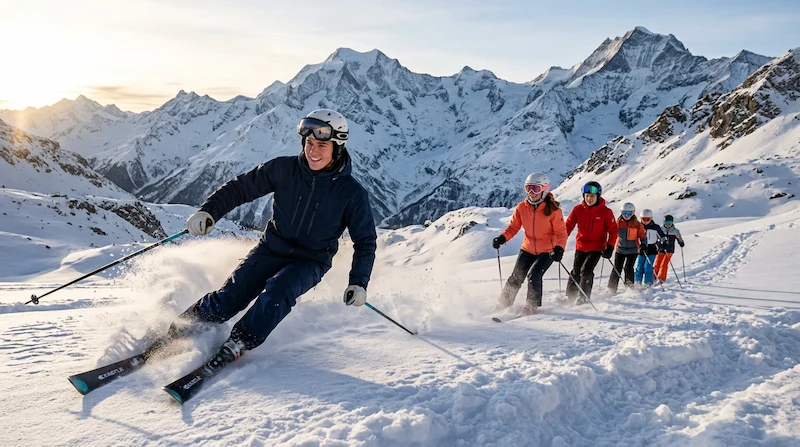
Learning to get up, analyze what went wrong without self-criticism, and try again is a powerful life lesson. We frame challenges not as tests to be passed or failed, but as puzzles to be solved. This mindset shift is crucial for long-term development, both on and off the snow.
Setting goals and celebrating progress
The learning process is most effective when it is goal-oriented. At the beginning of a session or a week-long program, we sit down with the teenager and discuss what they want to achieve. Their goals might be technical (“I want to carve a clean turn”), tactical (“I want to ski the Chamois black run”), or experiential (“I want to ski powder for the first time”). By setting these goals collaboratively, we give them ownership over their learning journey. This simple act of listening and validating their ambitions is incredibly powerful.
Throughout the coaching process, we constantly reference these goals. We break them down into smaller, manageable steps, creating a clear pathway to success. When a milestone is reached—whether it’s linking three perfect carved turns or making it down their first mogul field—we make a point to acknowledge and celebrate it.
This positive reinforcement builds momentum and self-belief. It shows them that their hard work pays off and that they are capable of achieving what they set out to do. This cycle of goal-setting, effort, and achievement is the engine of confidence.
Using feedback and video analysis effectively
Feedback is the cornerstone of improvement, but its delivery is key. For teenagers, who can be sensitive to criticism, feedback must be constructive, specific, and balanced. We use a “feedback sandwich” model: start with something they did well, provide a specific point for improvement, and finish with another positive or encouraging remark. For example: “Your upper body was really quiet and stable on that last run. Let’s try to get a little more pressure on the outside ski at the start of the turn. If you can do that, your speed control will be remarkable.”
Video analysis is our most powerful tool for delivering objective, non-judgmental feedback. The camera doesn’t lie. When a teen can see the difference between what they thought they were doing and what they were actually doing, the path to correction becomes crystal clear. We can slow down the footage, draw lines to show body angles, and compare their form to that of a professional. This visual evidence depersonalizes the feedback, turning it from a critique of their performance into a fascinating biomechanical analysis. It engages their analytical minds and empowers them to become active participants in their own technical development.
Beyond the lesson: Fostering a lifelong passion for the mountains
Our ultimate ambition extends far beyond the duration of a single lesson or ski week. We aim to ignite a genuine, lifelong passion for skiing and the mountain environment. This means going beyond technical instruction and sharing our love for the culture, etiquette, and adventure of the sport. It’s about creating positive, lasting memories that they will carry with them long after they’ve left the Val d’Anniviers.
A teenager who leaves our program with improved skills is a success; a teenager who leaves as a passionate, responsible, and knowledgeable mountain enthusiast is our ultimate goal.
This holistic approach involves integrating elements of mountain awareness, safety, and exploration into every session. We discuss the history of the region, the names of the surrounding peaks, and the importance of respecting the natural environment. We teach them how to read a piste map, plan a route, and understand the mountain’s daily rhythms.
By treating them as fellow mountain people rather than just clients, we foster a deeper connection to the sport and the place. We want them to see skiing not just as a recreational activity but as a gateway to a world of adventure, personal growth, and natural beauty.
Understanding mountain safety and etiquette
Being a good skier is about more than just technique; it’s about being a responsible member of the mountain community. We explicitly teach the FIS (International Ski Federation) rules of conduct on the slopes. These rules are the “rules of the road” for skiers and snowboarders, covering topics like right of way, controlling speed, and stopping in a safe place. We discuss real-world scenarios and use them as teachable moments. For example, when approaching a busy intersection of runs, we’ll talk about the best way to navigate it safely.
Beyond the official rules, we instill a sense of mountain etiquette. This includes simple things like not cutting lift lines, helping someone who has fallen, and being aware of those around you. When we venture off-piste, the safety education intensifies. We ensure they understand the basics of avalanche awareness and the importance of skiing with a partner and carrying the proper safety gear. This knowledge empowers them to make safer choices and builds a foundation for a lifetime of responsible mountain exploration.
Choosing and maintaining the right equipment
The right equipment can make a world of difference in a skier’s performance and enjoyment. For a teenager who is still growing and rapidly improving, having properly fitted and appropriate gear is crucial. We offer expert advice on everything from skis and boots to helmets and goggles.
We can explain the difference between a carving ski and a freeride ski and help them understand what type of equipment is best suited to their current ability and future aspirations. A key focus is on ski boots, as they are the single most important piece of equipment for control and comfort. A poorly fitting boot can ruin a day on the slopes.
We also teach them the basics of equipment maintenance. We show them how to check their bindings, how to de-tune the tips and tails of their skis, and why waxing is important for performance. This knowledge gives them a greater sense of ownership and a more in-depth understanding of their gear. It’s another step in their journey from being a passive participant to an engaged and knowledgeable skier. The table below outlines some general equipment considerations for developing teenage skiers.
| Skill level | Recommended ski type | Key boot feature | Primary focus |
|---|---|---|---|
| Intermediate | All-Mountain (75-90mm waist) | Medium Flex (70-90) | Versatility and forgiveness for skill development on varied terrain. |
| Advanced (Piste-focused) | Piste/Carving Ski (68-80mm waist) | Stiffer Flex (90-110) | Edge grip, stability at speed, and rebound for dynamic carved turns. |
| Advanced (Freeride-focused) | All-Mountain/Freeride (90-105mm waist) | Medium-Stiff Flex with walk mode | Float in soft snow, stability in variable conditions, and versatility. |
Inspiring the next generation of skiers
Ultimately, our work is about more than just one teenager. It’s about nurturing the next generation of passionate skiers. When a young person becomes truly competent and confident on the mountain, their enthusiasm is contagious.
They inspire their friends, their younger siblings, and even their parents. They become ambassadors for the sport, sharing their positive experiences and encouraging others to get out on the snow. This is the beautiful, self-perpetuating cycle of ski culture, and we are proud to play a part in it.
- Building community: We encourage a sense of camaraderie among the young people in our programs, fostering friendships built on a shared love for the mountains.
- Leading by example: Our instructors are not just teachers; they are role models who demonstrate a passion for skiing and a deep respect for the alpine environment.
- Creating lifelong learners: We equip them with the tools and the mindset to continue improving and exploring on their own, long after their formal lessons have ended.
The journey of a teenage skier is one of immense potential. With the right guidance, the challenging slopes of Grimentz-Zinal can become the perfect training ground for developing elite technical skills, unshakeable confidence, and a profound love for the mountains. It’s a privilege to be a part of that journey.
Our approach is designed to meet young athletes where they are and take them where they want to go. If you are ready to provide a transformative mountain experience that blends high-performance coaching with genuine mentorship, we are here to help. Request any of our ski services, whether it be a private or group lesson, to start the journey toward unlocking their full potential on the snow.